

How Often Should You Replace Your Pillow? Signs It's Time for a New One
Quick answer: Most sleep experts suggest replacing your pillow every 1 to 2 years, though this varies by filling. Memory foam and latex pillows tend to last 2 to 4 years, while polyester and down break down faster. Beyond the calendar, watch for flattening, lumps, yellow staining, odours, or waking with a stiff neck; these are the real signs you need a new pillow.
If you've had the same pillow for years and have started wondering whether it's doing its job, you're not alone. Pillows are one of the most overlooked items in the bedroom, yet they support your head and neck for roughly a third of your life. Knowing when to replace your pillow isn't just about comfort; it's about sleep quality, hygiene, and waking up without a sore neck.
This guide walks through how often to replace a pillow depending on what's inside it, the flat pillow signs and other red flags to watch for, simple checks you can do tonight, and what to look for when you're ready to buy a replacement.
How Long Do Different Pillows Last?
Not every pillow wears out at the same rate. The filling inside determines how quickly it loses shape, traps allergens, and stops supporting your neck properly.
According to the Sleep Foundation, most experts recommend replacing pillows every 1 to 2 years, though higher-quality materials and denser foams generally mean you can go longer between replacements.
|
Pillow filling |
Typical lifespan |
|---|---|
|
Polyester / fibrefill |
6 months – 2 years (least durable) |
|
Down alternative |
Approx. 1–2 years |
|
5–10 years |
|
|
2–3 years |
|
|
2–4 years |
|
|
Hulls refreshed roughly every 3 years once flattened |
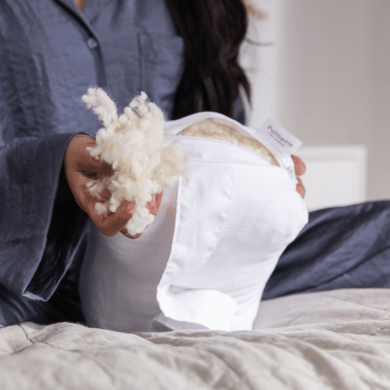
This gives a useful benchmark for pillow lifespan wool memory foam comparisons, though it's worth noting wool behaves differently to other materials. British wool pillows, like ours at Putnams, use a layered construction. The Height Adjustable British Wool Pillow is built from six individual wool inserts, so you can top up loft as the filling naturally compresses rather than replacing the whole pillow outright. Wool's adjustable design is intended to extend useful life, offering replacement wool inserts separately.
If you're weighing up how long should a memory foam pillow last, the Sleep Foundation's 2–3 year guideline applies to typical foam. Denser, high-quality memory foam, such as the Putnam Memory Foam Pillow, which uses firm, high-density foam with contoured ear and shoulder recesses, is designed to hold its shape for longer than standard high-street foam blocks, though you should still check it regularly rather than relying on the calendar alone.
See also - The Ultimate Guide to Choosing Pillows for Every Mattress Type
Signs Your Pillow Has Lost Its Support
So, how do I know when my pillow needs replacing? Your body usually tells you before you consciously notice the wear. Here are the main signs you need a new pillow:
- You wake up with a stiff neck, sore shoulders, or a dull headache. The NHS notes that neck pain is commonly caused by sleeping in an awkward position, and recommends using "a low, firm pillow" and making sure your head stays level with the rest of your body while you sleep.
- It fails the fold test. Fold the pillow in half and let go. A supportive pillow springs back; one that stays folded or opens sluggishly has lost its structure.
- You're constantly fluffing, punching, or doubling it up. Needing a second pillow underneath to regain height is your body compensating for lost loft.
- It's developed lumps, a permanent dent, or uneven filling. This means the internal structure has broken down unevenly.
- Persistent yellow staining or a musty smell that survives washing. Sweat, body oils, and skin cells penetrate the core over years of use.
- Your allergies seem worse at night. Over time, pillows accumulate dust mites, mould spores, and other allergens. A peer-reviewed study in the journal Allergy found that the fungal species most commonly recovered from pillow samples were Aspergillus fumigatus, Aureobasidium pullulans, and Rhodotorula yeast.
In a US local TV segment from KCWX, sleep specialist Dr Brian Chen explains that an unsupportive pillow can cause muscle tension in the neck and shoulders, directly triggering morning tension headaches, and that most pillows need replacing within a year or two as the material inside gives out. He also notes that the "right" pillow isn't about price, but about what fits your body and sleep position.
A quick self-check table
|
Check |
What it tells you |
|---|---|
|
Fold test |
Doesn't spring back = filling has lost resilience |
|
Dent/lump test |
Uneven filling = inconsistent support |
|
Morning stiffness |
Pillow may no longer hold your neck in alignment |
|
Staining/odour after washing |
Hygienic limit reached, even if it looks fine |
|
Date check |
If you can't remember buying it, it's probably overdue |
Is It Bad to Sleep on an Old Pillow?
Yes, both for comfort and hygiene.
Physically, a flattened pillow no longer keeps your cervical spine supported, which the NHS links to common causes of neck pain and stiffness.
Hygienically, ageing pillows build up sweat, oils, dead skin, and allergens that regular washing alone can't fully remove.
Treating your pillow as sleep equipment, rather than a soft furnishing you forget about, makes a genuine difference to how refreshed you feel each morning.
See also - How Often Should You Change Your Pillow? The Complete Guide.
What to Look for in a Replacement Pillow
Once you've decided it's time, match your new pillow to how you sleep rather than simply picking whichever looks most comfortable in the shop:
- Side sleepers generally need a firmer, higher-loft pillow to fill the gap between the shoulder and neck.
- Back sleepers usually do better with medium loft and medium firmness, supporting the natural neck curve.
- Front sleepers benefit from a thinner, softer pillow to avoid overextending the neck.
For ergonomic neck support, Putnams' neck pillows collection includes memory foam, latex, wool, and buckwheat options with removable, washable covers. If you prefer buoyant, naturally cool support that doesn't rely on body heat to soften, the Graphite Latex Pillow is designed for spring-back elasticity. For those wanting natural fibres with good breathability, Putnams' natural pillows range, including British wool, organic buckwheat hulls, and graphite latex, is handmade in Devon, UK, and naturally resistant to dust mites.

Sleep Better, Starting Tonight
Whether your pillow has failed the fold test, developed a permanent dent, or you simply can't remember when you bought it, the signs are usually there long before the discomfort becomes obvious. A quick check tonight- fold it, press it, smell it, could explain weeks of restless sleep.
If it's time for a change, explore Putnams' full pillow range to find a fit for your sleep position, whether that's supportive memory foam, naturally cooling latex, or adjustable British wool.
Frequently Asked Questions
How often should you replace your pillow?
As a general guide, replace standard pillows every 1 to 2 years. Memory foam and latex can last 2 to 4 years with good care, according to the Sleep Foundation.
How do I know when my pillow needs replacing?
Look for flattening, lumps, persistent stains or odour, and morning neck stiffness. The fold test is a quick home check: if the pillow doesn't spring back after folding, it's likely time for a replacement.
How long should a memory foam pillow last?
Typically 2 to 3 years, per the Sleep Foundation. Denser, higher-quality foam may hold its shape for longer, but it's still worth checking regularly rather than relying solely on age.
Is it bad to sleep on an old pillow?
Yes. An old, flattened pillow fails to support your neck properly, and the NHS links awkward sleeping positions and poor support to common neck pain. Old pillows also accumulate allergens over time.
How can I make my pillow last longer?
Use a washable pillow protector, follow the manufacturer's care instructions, air the pillow regularly, and avoid sleeping on damp hair or without a protective cover.
Should I replace both pillows at the same time if I share a bed?
If both pillows are the same age, replacing them together usually keeps support consistent for both sleepers.


From the blog
View all




Leave a comment