

Hip Pain at Night: Why Side Sleepers Struggle to Stay Asleep
If you dread climbing into bed because you know your hips will start throbbing the moment you lie down, you are not alone. It is a frustrating reality for millions of people. In fact, the Arthritis Foundation estimates that more than one-third (33%) of U.S. adults report that hip, knee, or foot pain keeps them awake at night.
Sleep should be a time for recovery, not discomfort.
Yet, for many, the nighttime hours turn into a battle for a comfortable position, resulting in broken sleep and exhausted mornings. Understanding why this happens, and specifically why side sleeping exacerbates the issue, is the first step toward reclaiming your rest.
This blog explores the mechanics of hip pain at night, the specific conditions that flare up in the dark, and practical solutions to improve your hip alignment sleep.
Why Hips Take the Load During Sleep
Humans are creatures of habit, especially when it comes to sleep positions.
A study published in Nature and Science of Sleep, observing 664 sleepers, found that participants spent 54.1% of their time in the lateral (side) position. Interestingly, this preference for side sleeping increases significantly with age and BMI. A separate 2023 survey by Panda London supports this, reporting that a staggering 79.8% of participants identify as side sleepers.
While sleeping on your side is generally good for breathing and digestion, it presents a mechanical challenge for your joints. When you lie on your side, your entire body weight is concentrated on a small surface area: the greater trochanter (the bony bump on the side of your hip).
This intense hip pressure sleep position reduces blood flow to the compressed tissues and increases tension in the muscles surrounding the joint. If you already have underlying inflammation or sensitivity, this pressure quickly transforms a dull ache into sharp, wakeful pain.
See also - Knee and Hip Replacement Recovery: Finding Your Best Sleep Position
The Real Causes: It’s Not Always Bursitis
For years, many people, and even some clinicians, assumed that point tenderness on the outside of the hip was almost always bursitis (inflammation of the fluid-filled sacs that cushion the joint). However, modern medical understanding has shifted.
Dr. Lauren Elson, a Physical Medicine and Rehabilitation Instructor at Harvard Medical School, notes a crucial distinction. She explains that while bursitis is often blamed, 90% of the time, lateral hip pain is not bursitis at all.
Instead, it is usually gluteal tendinopathy or muscle imbalance.
This collection of conditions is now commonly referred to as Greater Trochanteric Pain Syndrome (GTPS). It is far more common than you might think. Research published in the British Journal of General Practice indicates that GTPS is the cause of hip pain in 10–20% of patients presenting to primary care, with an incidence rate of 1.8 patients per 1,000 per year.
Distinguishing between bursitis sleep pain and tendinopathy matters because the management strategies differ. While bursitis may respond to rest, tendinopathy often requires specific loading management and alignment correction, specifically addressing leg position side sleeping.

The Gender Factor and Bilateral Pain
One of the most frustrating aspects of nocturnal hip pain is when you roll over to relieve the pressure on one side, only to find the other hip hurts just as much.
A medical survey by Rehab Access reports that over 19% of adults experience hip pain, and of those sufferers, 52% feel it in both hips. This bilateral pain makes finding a comfortable sleeping position nearly impossible.
Women are disproportionately affected by this issue due to wider pelvic anatomy, which increases the angle of the thigh bone and places more tension on the gluteal tendons. According to the Journal of Rheumatology, women are significantly more likely than men to develop bilateral hip issues. Specifically, 6.6% of women versus 1.9% of men develop osteoarthritis in both hips simultaneously.
If you are wondering why my hip hurts when I sleep on my side, anatomy likely plays a significant role. The wider the pelvis, the sharper the angle of the top leg when it drops across the body during sleep, creating a "perfect storm" for tendon strain.
The Vicious Cycle of Pain and Sleep
Pain does not just make it hard to stay asleep; it makes it difficult to fall asleep in the first place. This creates a reciprocal relationship where pain ruins sleep, and poor sleep lowers your pain threshold, making everything feel worse the next day.
A 2023 study in the journal Medicine titled "Sleep quality and nocturnal pain in patients with hip osteoarthritis" found a significant correlation between worsening hip pain and poor sleep quality scores on the Pittsburgh Sleep Quality Index (PSQI).
Furthermore, the Journal of Pain Research highlights that musculoskeletal pain is often highest in the evening. This creates a barrier to "sleep latency", the time it takes to actually drift off. When you combine the natural circadian rise in inflammation markers with the mechanical pressure of lying down, it is no surprise that side sleeping hip pain is a major disruptor of rest.
The Importance of Pelvic Alignment
To solve the problem, we have to look at what the legs are doing.
When you sleep on your side without support, your top leg naturally drops forward and down, crossing the midline of your body.
In medical terms, this is called "adduction."
This adduction does two things:
- Stretches the gluteal tendons: It pulls the tendons of the top hip taut across the greater trochanter bone, compressing them. If you have GTPS, this is like pressing on a bruise all night long.
- Twists the lower back: It rotates the pelvis, which can strain the lumbar spine and sacroiliac joints.
This poor alignment explains why you might wake up stiff and sore, even if your mattress is high-quality. The issue isn't just the surface you are lying on; it is the geometry of your skeleton while you rest.

Reducing Pressure on the Hip Joint
You do not have to force yourself to become a back sleeper if it doesn't come naturally. Simply, by making a few strategic adjustments to your sleep environment, you can reduce the strain on your hips and stop the cycle of pain.
1. Correct Your Leg Position
The most effective way to determine the best sleep position for hip pain is to ensure your legs remain parallel. You want to prevent that top knee from dropping over the bottom one.
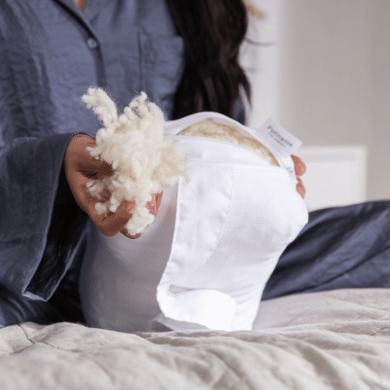
Using a body pillow or a specialised knee pillow has been shown to reduce pressure on the hips and shoulders significantly by preventing the top leg from falling into adduction. Placing a dedicated support, such as a Putnams knee pillow, between your legs keeps the knees stacked. This unloads the gluteal tendons and keeps the pelvis neutral.
The sports recovery pillow I ordered is perfect and makes my night's sleep much better as it relieves back and hip pain. I have two now so I can turnover and have the same comfort. - Mrs Vanessa P
2. Soften the Pressure Points
If your mattress is too firm, it will push back against the greater trochanter, aggravating GTPS or bursitis. If you cannot replace your mattress, consider a high-density memory foam topper. This allows the bony prominence of the hip to sink in slightly, distributing weight more evenly along the thigh and torso rather than focusing it on the painful joint.
3. Daytime Habits for Nighttime Relief
Since hip pain at night is often linked to tendon health, your daytime activity matters. Avoid standing with your weight shifted to one hip and try not to cross your legs when sitting. These habits compress the same tendons that hurt at night.
Common Questions about Hip Pain at Night
When it comes to sleeping comfortably and protecting your overall health, pillow support plays a crucial role, especially for your neck. Here are answers to some frequently asked questions:
Can pillow height cause neck pain?
Yes, pillow height can directly affect neck comfort and alignment. If a pillow is too high or too low, it may disrupt the natural curve of your cervical spine, leading to tension and pain. Ensuring that your pillow supports a neutral head and neck position can prevent strain and promote better rest.
What is a red flag in neck pain?
A red flag in neck pain could include symptoms like persistent pain that doesn't improve, numbness or weakness in your arms, severe headaches, or any accompanying fever. These could indicate underlying issues such as a serious nerve or spinal condition, and you should consult a healthcare professional promptly.
Why is my pillow hurting my neck all of a sudden?
If your pillow suddenly feels uncomfortable, it could be due to changes in its support or your body. Pillows lose their shape and cushioning over time, which can fail to maintain proper neck alignment. Additionally, factors like switching your sleep position or a new neck strain during the day can make your old pillow feel inadequate.
What happens if your pillow is too high?
If your pillow is too high, it forces your neck into a flexed position throughout the night, leading to stiffness, muscle strain, and potential neck pain. Over time, this misalignment can even contribute to headaches or poor sleep quality. Choosing a pillow that aligns with your preferred sleep position, back, side, or stomach, helps avoid this issue.
Taking Action for Better Rest
Living with interrupted sleep drains your energy and impacts your overall metabolic health. While painkillers might offer short-term relief, they do not address the mechanical root of the problem: pressure and alignment.
If you are struggling with how to reduce hip pressure at night, start with alignment. Investing in the right supports, like those crafted by Putnams, can prevent the adduction that aggravates your tendons. By keeping your hips stacked and cushioned, you can finally find the comfort required to get a full night's sleep.


From the blog
View all




Leave a comment