

Andrew Huberman’s Temperature Trick: Why Cooling Your Body Helps You Fall Asleep Faster
It’s 11:00 PM. You’re exhausted, but the moment your head hits the pillow, your mind decides it’s time to replay every awkward conversation you’ve had since 2005. You toss, you turn, you flip the pillow to the cool side, and suddenly, you feel a little more settled.
That fleeting relief from the cool side of the pillow isn’t just comfort; it’s biology.
According to Stanford neuroscientist Dr Andrew Huberman, and his research into sleep strategies, temperature is one of the most powerful levers you can pull to fall asleep faster.
If you’ve been struggling to drift off after a stressful week at work or chasing the kids around, manipulating your body temperature is a cornerstone in understanding how to fall asleep faster, might be the natural, stimulant-free solution you’ve been looking for.
Let's explore the science behind the Huberman temperature minimum explained and offers practical ways to cool down so you can finally get the rest you deserve, drawing on the latest sleep latency tips and research about why does cooling help you sleep.
How Body Temperature Circadian Rhythm Controls Sleep
We often think of sleep as a simple "off switch" for the brain, but it’s actually a complex hormonal dance orchestrated by your circadian rhythm, specifically, your body temperature circadian rhythm.
This internal clock uses two main signals to set your watch: light and temperature.
While most of us know that blue light wakes us up, fewer realise that our core body temperature needs to drop by about 1-3 degrees Fahrenheit (approximately 1-1.5 degrees Celsius) to initiate sleep effectively. The body temperature circadian rhythm creates a predictable ebb and flow, with sleep coming most easily as your temperature drops.
Dr Huberman explains that this drop is a non-negotiable biological trigger.
When your core temperature falls, it signals to your brain that it's time to transition from wakefulness to rest. Conversely, if your core temperature stays too high, whether from a hot room, late exercise, or a heavy meal, your body struggles to enter that deep, restorative slumber.
This is also the reason why cooling helps you sleep: cooling supports the natural descent in body temperature required for healthy sleep, reducing sleep latency and ensuring you fall asleep faster.
It’s why you might feel drowsy after a hot bath. It’s not the heat itself that makes you sleepy; it’s the rapid cooling your body experiences the moment you step out of the tub, a key tactic if you want to know how to reduce core body temperature before bed.
See also - Hot Flushes Sleep Solutions - Best Cooling Bedding for Night Sweats
What Huberman Means by 'Temperature Minimum'
In his popular Huberman Lab podcast, Dr Huberman frequently discusses the concept of the "temperature minimum." This is the point in your circadian cycle where your body temperature is at its absolute lowest, typically occurring about two hours before your natural wake-up time (around 4:00 AM for many people).
Understanding this body temperature circadian rhythm is central to modern sleep latency tips.
Understanding this rhythm helps explain why cooling down in the evening is so vital, especially for those searching for how to fall asleep faster. You are essentially working with your biology to reach that minimum, rather than fighting against a warm environment that keeps your cortisol levels (the stress hormone) elevated.
Think of it this way: if you’re too hot, your body is on high alert. Cooling down is the physical equivalent of telling your nervous system, "It’s safe to shut down now."
See also - Beat the Heat - Ultimate Guide for Refreshing Summer Sleep
Why Cooling Your Body for Sleep, Especially Hands and Feet, Works
Many seeking Andrew Huberman's sleep hacks assume you need to sit in an ice bath to experience the benefits of cooling your body for sleep.
Thankfully, that’s not the case.
One of the most efficient ways to lower your core body temperature is through the glabrous skin surfaces, specifically, the palms of your hands, the bottoms of your feet, and the upper part of your face. These are crucial for releasing heat before bed, and they're often overlooked in home-based sleep latency tips.
Dr Huberman notes that sticking a hand or foot out from under the duvet is often enough to dump excess heat.
When these surfaces are cool, they cool the blood passing through them, which then circulates back to your core, lowering your overall temperature.
See also - How to Stop Overheating at Night (Without Gadgets or AC)

Cooling Strategies That Actually Work
Knowing the science is great, but how do you apply this on a busy Tuesday when you just want to fall asleep faster?
Here are practical steps, inspired by Andrew Huberman's sleep principles, to lower your core temperature and reduce sleep latency.
Take a Hot Bath or Shower
It sounds counterintuitive, but heating up to cool down is one of the most effective hacks for how to reduce core body temperature before bed. A hot bath or shower about an hour before bed dilates your blood vessels, pushing heat to the surface of your skin. When you step out into a cooler room, that heat dissipates rapidly, causing your core temperature to plummet and triggering sleepiness.
Lower the Room Temperature
Your bedroom environment plays a massive role.
The ideal sleeping temperature is around 18°C (65°F), an insight confirmed by Andrew Huberman's sleep research. If you’re waking up sweating or tossing covers off, your room is likely too warm.
Keep Your Hands and Feet Free
If you tend to overheat, avoid heavy socks or tucking your hands deep under the quilt. Leaving a foot exposed to the cooler air is a simple, zero-cost method rooted in Huberman's temperature minimum, explained and modern sleep latency tips.
How Bedding Influences Thermoregulation
Sometimes, adjusting the thermostat isn’t enough.
If your mattress or duvet traps heat, your body will struggle to cool down regardless of the room temperature. This is where choosing the right materials, such as cooling mattress toppers, becomes a game-changer for your sleep hygiene.
Many synthetic fabrics trap moisture and heat against the skin, creating a microclimate that keeps your core temperature elevated. Switching to breathable, natural materials allows for better airflow and moisture wicking, supporting your body’s natural cooling process.
Why Wool Works
Wool is often associated with warmth, but it is actually a master thermoregulator.
It can absorb a significant amount of moisture without feeling damp, pulling sweat away from your skin so it can evaporate. This keeps you cool when you’re hot and warm when you’re cold, maintaining that steady temperature needed for deep sleep.
Products That Help You Stay Cool Overnight
If you are ready to invest in better rest, swapping out heat-trapping bedding for specialised cooling products like cooling wool mattress toppers can help you decrease sleep latency (how fast you fall asleep).
At Putnams, we design products specifically to support this kind of thermoregulation.
Cooling Wool Pillows
Your head is a major source of heat loss.
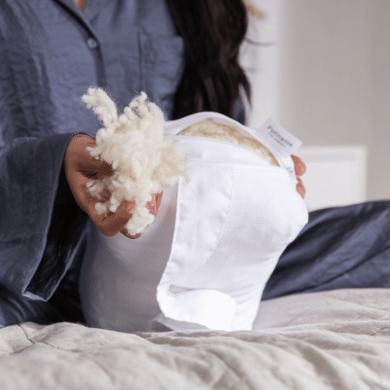
A standard foam pillow can sometimes retain heat, creating a "hot spot" that wakes you up. Our Wool Pillows are designed to dissipate heat away from your head and neck, providing that refreshing "cool side of the pillow" feeling all night long.
Breathable Mattress Toppers
Love your mattress but hate how hot it gets?
You don’t have to replace the whole bed. A Wool Mattress Topper adds a layer of natural breathability between you and the mattress, allowing air to circulate and preventing heat buildup. These cooling mattress toppers are a recommended upgrade from both sleep coaches and the Andrew Huberman sleep community for reducing night sweats and increasing comfort.
Natural Duvets
For those who fluctuate between freezing and roasting, a Wool Duvet balances temperature naturally. Unlike synthetic fills that can cause night sweats, wool works with your body’s heat cycles to keep you in the optimal zone for sleep.
See also - Best Bedding Options for Hot Sleepers
Frequently Asked Questions
Why does cooling help you sleep?
Cooling helps you sleep because a drop in core body temperature is a biological signal for your brain to transition into sleep. It lowers alertness, aligns your body temperature circadian rhythm, and is central to Andrew Huberman's sleep theory about how to fall asleep faster.
What is the Huberman temperature minimum explained?
The "temperature minimum" is the point in your 24-hour cycle when your body temperature is lowest, usually occurring about two hours before you wake up. Reaching this low point is essential for healthy sleep-wake cycles, as per Andrew Huberman's sleep discussions.
How to reduce core body temperature before bed?
You can reduce core body temperature by taking a warm bath 1-2 hours before bed, keeping your bedroom cool (around 18°C), and upgrading your sleep environment with cooling mattress toppers or breathable bedding to support natural thermoregulation.
Small Changes for Better Rest
You don’t need complex gadgets or harsh medications to fix your sleep.
By understanding the biology of body temperature circadian rhythm, you can make simple, natural adjustments that signal to your body it’s time to rest.
Whether it’s taking a warm shower, lowering the thermostat, or upgrading to a cooling pillow or cooling mattress topper, aligning your environment with your circadian rhythm is one of the kindest things you can do for your health.
Ready to stop tossing and turning with these proven Andrew Huberman sleep strategies?
Let us know what works for you in the comments below. We would love to hear from you.


From the blog
View all




Leave a comment